For most of us, a full schedule doesn’t feel unusual; it feels expected. We look at our week and see blocks of time already claimed by meetings, tasks, and follow-ups. Even the small pockets in between are often treated like gaps to be plugged. There is a specific, humming rhythm to this—a sense that as long as we are moving, we are on track.
Because we’ve normalized this constant motion, any unexpected opening in our day can feel like a problem to be solved. If a meeting gets canceled or a task finishes early, our immediate instinct is to find something else to fill that void. We want to be productive. We want to keep the momentum going. But deep down, we are often treating an open hour like a loose thread on a sweater—something that needs to be tied off immediately.
The Discomfort of the Unassigned Hour
If you’ve ever had an hour open up and felt a sudden spike of anxiety, you aren’t alone. At first, it seems like a gift—a little breathing room. But almost immediately, your brain starts scanning: What should I do with this? What have I been putting off? Before you know it, you’ve filled the space. You didn’t do it because you needed to, but because leaving that time unassigned felt too close to being unstructured, and unstructured felt too close to being uncertain. When you are used to operating at full capacity, white space feels less like a gift and more like a vacuum that needs to be filled.
Why We Mistake “Space” for “Waste”
There is a quiet, persistent belief that drives this behavior: If I’m not doing, I’m wasting time. We see it in the urge to check off one more list item or the habit of filling a commute with a podcast instead of just thinking. We assume that progress only happens when we are actively producing. But this overlooks a simple truth: not all progress comes from doing. Some of it comes from clearing.
Without space, everything starts to run together. Tasks blur, decisions feel rushed, and your attention becomes fragmented. Even if you are getting everything done, the process begins to feel heavy. White space isn’t wasted time; it’s the container that allows your work to settle.
What White Space Actually Does
When you allow time to remain open, your nervous system finally has a chance to come down from that constant state of movement. Your thoughts have a chance to organize themselves, and ideas that would have been crushed by the weight of a busy schedule have room to form clearly.
You move from a state of reacting—bouncing from one thing to the next—to a state of choosing. You begin to pick where your attention goes rather than letting the day decide for you. You’re still working, and you’re still moving forward, but you’re doing it with a new kind of steadiness. You start to trade urgency for clarity.
Building Space on Purpose
White space doesn’t usually appear by accident; it has to be invited in. This doesn’t require a dramatic overhaul of your life, but it does require intention:
Leave gaps between meetings: Stop scheduling back-to-back calls.
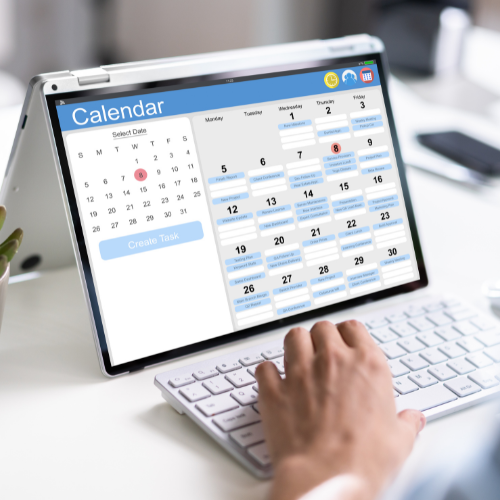
Protect your blocks: Designate time on your calendar that is "unassigned" by design.
Practice restraint: When something gets canceled, choose not to fill it with a new task.
These choices might feel small, but they fundamentally change the structure of your day. Instead of every hour demanding something from you, you create moments where nothing is required. That "nothing" is the secret to making everything else feel more manageable.
Learning to Let the Space Stay
The hardest part of this practice isn't creating the space; it’s letting it stay empty. The urge to make that time "useful" will still show up. But every time you leave a gap open, you’re teaching yourself a vital lesson: that your value isn’t tied to your constant output. You’re proving to yourself that space can exist without anything being lost. Over time, this becomes easier, not because you’ve forced it, but because you’ve started to feel the benefits.
A Different Kind of Productivity
When white space becomes a regular part of your schedule, your definition of productivity changes. It’s no longer about how much you can cram into a single day; it’s about how well you can move through what you’ve chosen to do. You are less rushed, more present, and more aware of what actually matters. Your decisions become clearer, your energy becomes more stable, and your work becomes more intentional.
As you move through this week, keep an eye out for those moments when space appears. Before you rush to fill them, pause and ask yourself: What happens if I just leave this open? You don’t need to have an answer right away. Just feel the difference.
Closing the Month
This month wasn’t about doing less just for the sake of it. It was about understanding what you are saying yes to, noticing how your commitments build, and creating the necessary breathing room for your energy to reset.
You’ve seen how quickly a calendar can fill up. You’ve noticed the patterns that drive that busyness. And now, you know how to protect your time. It won’t be perfect, and you won’t get it right every day, but that’s okay. Remember: overcommitment doesn’t happen because of one big decision—it happens because of the slow absence of space. You now have the tools to create that space, and more importantly, the permission to keep it.
Here’s a closing section that wraps up the series and leads naturally into your offers:
Ready to Protect the Space You’ve Created?
You’ve spent this month noticing what you’re saying yes to, how those commitments build, and what happens when you finally allow space back into your life.
But here’s the part that matters most: keeping it.
Because it’s one thing to create white space… and another to actually protect it, trust it, and build your life around it.
If you’re ready to go deeper with this work—beyond just noticing and into actually reshaping how you live and work, here are two ways to build on this:
✨ 4-Week Blueprint Reset
Inside this experience, we focus on the foundation work, the heart work, and the mindset shifts that help you create sustainable balance. Not a temporary reset, but a way of operating that allows you to have both a career and a life you genuinely enjoy—without constantly feeling pulled in every direction.
Save your spot HERE.
✨ Free Clarity & Strategy Call
If you’re feeling like you need a starting point—someone to help you sort through where you are right now and what would actually serve you moving forward—you don’t have to figure that out alone.
You can book a Free Clarity & Strategy Call, where we’ll talk through your current season, your goals, and what your next steps could look like. This is a space to get honest about what’s working, what isn’t, and how to move forward in a way that feels aligned—not overwhelming.
Book your free call HERE.